CJC-1295 and ipamorelin belong to two different classes of growth hormone secretagogue, and pairing them gives researchers a way to stimulate the somatotropic axis through two receptor systems at once.
- Supports muscle growth and recovery, as well as fat loss, for a sustained period
- Stimulates both immediate and prolonged growth hormone release
- Doesn’t affect stress hormones such as cortisol
- Prohibited by the World Anti-Doping Agency
- Usually administered by subcutaneous injection
- May cause flu-like symptoms
- CJC-1295 presents a risk of immunogenicity and life-threatening immune responses
CJC-1295 is a synthetic analog of growth hormone-releasing hormone (GHRH), built on the GRF(1–29) fragment with amino acid substitutions that resist enzymatic degradation. In its DAC-conjugated form, it binds covalently to serum albumin, extending its circulating half-life from minutes to several days. Ipamorelin is a selective pentapeptide agonist at the ghrelin receptor (GHS-R1a), stimulating pituitary somatotrophs through a pathway entirely separate from GHRH signaling.
Why combining CJC-1295 with Ipamorelin
The rationale for combining them is mechanistic. CJC-1295 activates the GHRH receptor and drives a cAMP/PKA cascade that primes somatotrophs for growth hormone synthesis and release. Ipamorelin engages GHS-R1a and recruits a phospholipase C / protein kinase C pathway, while also suppressing somatostatin tone. Because the two act on separate receptors and separate second messengers, co-administration in published work produces a GH pulse larger than either agent alone — a synergy well characterized in the GHRH/GHRP literature.
Ipamorelin’s main advantage over earlier-generation GHRPs such as GHRP-6 and GHRP-2 is selectivity. At GH-stimulating concentrations, preclinical studies report little to no effect on cortisol, prolactin, or aldosterone, which makes it a cleaner instrument for isolating GH-specific effects without confounding endocrine noise. Paired with sustained GHRH receptor activation from CJC-1295, the combination supports investigation of extended GH secretion dynamics in a single model.
Growth hormone elevation is associated in animal literature with changes in lean tissue accretion and adipose metabolism, and this blend is used in research settings examining those endpoints alongside IGF-1 response, receptor sensitivity, and secretagogue tolerance over repeated exposure.
Specifications
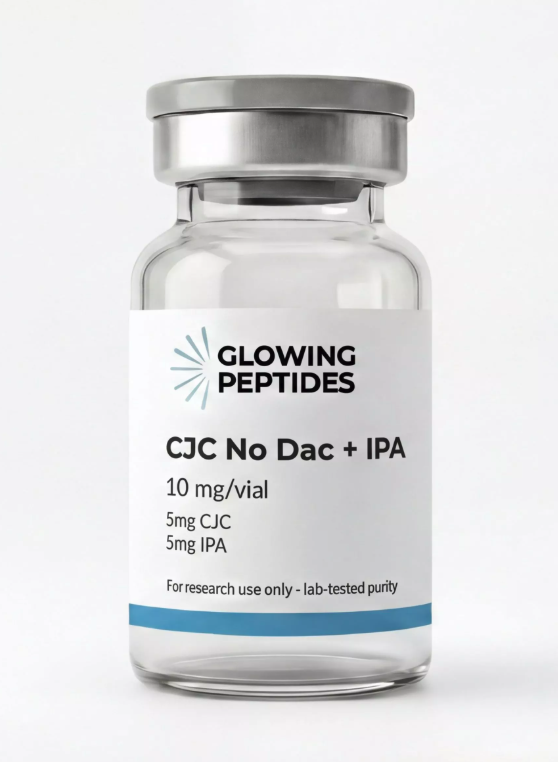
- Co-lyophilized powder: 5 mg CJC-1295 + 5 mg ipamorelin per vial
- Purity >98% by independent HPLC; COA available
- Reconstitute with bacteriostatic water; store lyophilized at -20°C
- For laboratory research use only. Not for human or veterinary use.